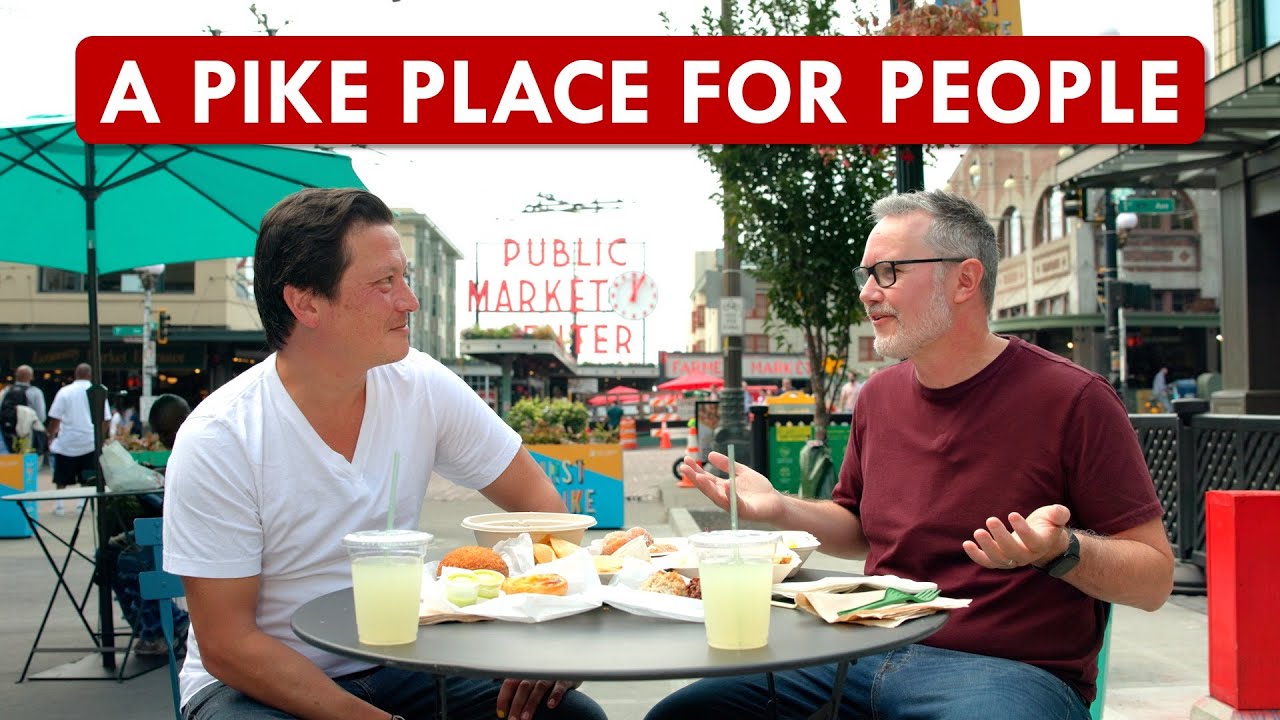
It will result in increased open space. It will result in increased space for trees. It will result in increased livability. It will re-democratize our urban space.
It will be glorious.

As these spaces will largely be permeable to bikes and feet (and in some instances, transit) – they’ll also be much faster than driving. Bollard usage will see a dramatic uptick. I’m a massive fan of bollards.
Because this reconfiguration will seriously curtail private cars speeding through urban village commercial districts, streets paralleling these arterials will also need to see significant alteration to eliminate cut-throughs and ensure dramatically reduced speeding by cars. I’m a big fan of Tempo 20 (kmh, 13 mph max) for these kinds of shared spaces. This will effectively turn these streets into spielstrassen/play streets. Add some corner cafes, some restaurants… <chef’s kiss>

And yes, by all means, this will require radically more biking infrastructure. Cargo bikes will be much more efficient at moving people and goods short distances. Copenhagen has 40,000 of them. Seattle has… maybe 400. With proper outreach, education, planning, and most importantly – infrastructure –we can get there, too.
Yes, we absolutely will need to remove anti-housing restrictions and once again, allow multifamily housing around existing parks, too. But the open space deficit in our urban villages is so great, we will need to radically, and rapidly, rethink how we approach creating a more sustainable, more livable, and more equitable city.
This is a cross-post from Mike’s personal blog on Medium.Bringing Baugruppe To Seattle