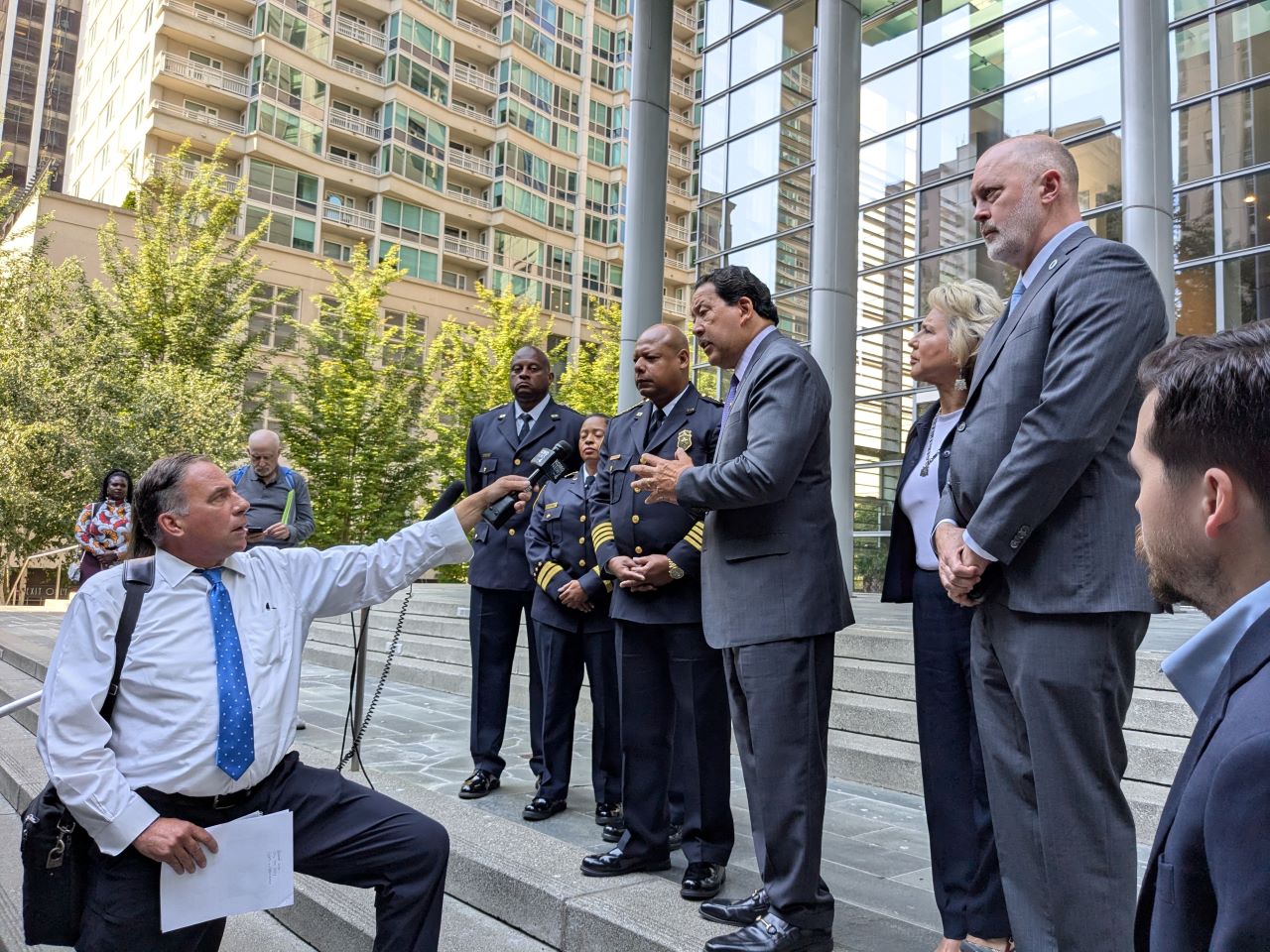
Headed to Olympia to turn in signatures. Then headed to the ballot in November! pic.twitter.com/9DPHnqPWiy
— Yeson1631 (@yeson1631) July 2, 2018
Boosters of a somewhat similar, but less progressive carbon fee proposal in 2016 failed at the ballot on a 41% yes, 59% no vote. There were several points of contention with that measure, including its revenue-neutral approach and lack of direction to develop equitable programs for minority and lower-income communities to deal with transition to a low-carbon economy. There were even allegations that reductions to other state taxes to create a revenue neutral carbon fee would have actually cost the state more money in revenues than keeping the status quo tax system in place. Boosters of the new initiative, however, think they learned from that last campaign, which led to its new structure for adding new state revenue and funding equitable programs.Pastor Nancy Hylton "as a person of faith I recognize my responsibility to protect this place we've been given by the creator" pic.twitter.com/G2kPBWEWGW
— Yeson1631 (@yeson1631) July 2, 2018
What The Initiative Will Do
As proposed, the carbon fee will start at $15 per metric ton in 2020. Then it will rise each year thereafter by $2 plus inflation until the state’s 2035 greenhouse gas emissions reduction target is reached and it is evident that the 2050 goal can plausibly be met. While the carbon fee will hit a big list of carbon emission sources in the state, a host of fossil fuels, however, will remain exempt from the fee for various purposes, including:- Fuels brought into the state in vehicle tanks;
- Diesel, biodiesel, and aircraft fuels used for agricultural purposes;
- Aircraft and maritime fuels;
- Fuels used by federally-recognized indigenous tribes and tribal members;
- Special cases where exemptions from motor vehicle fuel taxes exist in state law; and
- The Centralia coal power plant set for closure in 2025.
- Transportation investments in public transit, non-motorized transportation, affordable transit-oriented development, rural broadband to facilitate telecommuting, transportation demand management strategies, and other ways to reduce vehicle miles traveled;
- Transitioning vehicles (whether by land or water) to low- or zero-emission and deploying electric charging stations;
- Building new renewable energy sources such as solar and wind power;
- Facilitating energy efficiency through carbon reduction programs for industrial facilities, implementation of district energy programs, educating the public about energy efficiency, offering grants for energy efficiency in new buildings, and providing funding to retrofit existing buildings; and
- Various carbon sequestering strategies through aquatic, agricultural, forestry, and terrestrial resources.
- Clean water programs, which will need to focus on restoration and protection efforts for estuaries, fisheries, and shorelines, preparation for sea level rise, floodplain risk reduction, sustainable water supplies, and stormwater treatment; and
- Healthy forest programs, which will need to improve forest tolerance to drought and wildfire risks, insect infestation, and changes in water.
- Preparing communities to deal with the effects of wildfires and providing them with the resources to prevent and suppress wildfires;
- Moving communities on tribal lands out of flood-prone areas, particularly if predicted to be affected by sea level rise; and
- Creating educational programs in schools to provide awareness and preparedness for climate change and environmental adaptation.
Little Opposition, Large Network of Support
So far, the initiative has mustered little opposition. But the oil and gas industry (the likes of BP, Chevron, Shell, and Phillips) is gearing up to fight the climate change-readiness measure tooth and nail. The Washington State Public Disclosure Commission reports that the industry has contributed nearly $24,000 to date and pledged another $250,000-plus to oppose the measure. Invariably, climate change deniers and ideologically anti-government types will also be roused to take up arms in time to join the anti-environment lobbyists from the oil and gas industry. The initiative, however, is supported by a wide array of groups–including the Sierra Club, Puget Sound Sage, The Nature Conservancy, Futurewise, Carbon WA, Transportation Choices Coalition, and labor unions–that believe it will radically achieve the kind of carbon reductions necessary to fight climate change while helping the state transition to a low-carbon economy in a fair and thoughtful manner. So despite the opposition, the broad-based support from dozens of influential groups should give Initiative 1631 a fair shot of success at the ballot box this year.$20 Per Ton: Governor Inslee Proposes Carbon Tax